
L1 Week 6-7: Effective Threat Investigation for SOC Analysts
Study notes on Mostafa Yahia's "Effective Threat Investigation for SOC Analysts".
Study notes on Mostafa Yahia's "Effective Threat Investigation for SOC Analysts".
Consolidated reference covering data privacy and protection controls, incident response procedures and data sources, digital forensics documentation, risk management/BIA concepts, cybersecurity resilience (redundancy and backup strategies), and physical/site security controls.
Covering host hardening and endpoint protection, mobile device management and deployment models, application attack indicators with secure coding practices, and cloud/virtualization security concepts including deployment and service models, hypervisor types, VDI, containers, and cloud security controls.

Covering Identity & Account Management controls, secure network architecture fundamentals, implementing network security appliances, and implementing secure network protocols (DHCP, DNS, TLS, FTP/SFTP, VPN, SSH).

Covers social engineering attacks, malware classification, and foundational cryptographic concepts from the Security+ (SY0-601) course.

Covers core Security+ SY0-601 concepts including foundational security, threat actor taxonomy, network reconnaissance, vulnerability scanning, and penetration testing.

Phantom Extraction “I know that a rev guy created this challenge, I just can’t prove it” Category: Forensics / Network Tools: Wireshark, CyberChef First Look We get a traffic.pcap file. O...
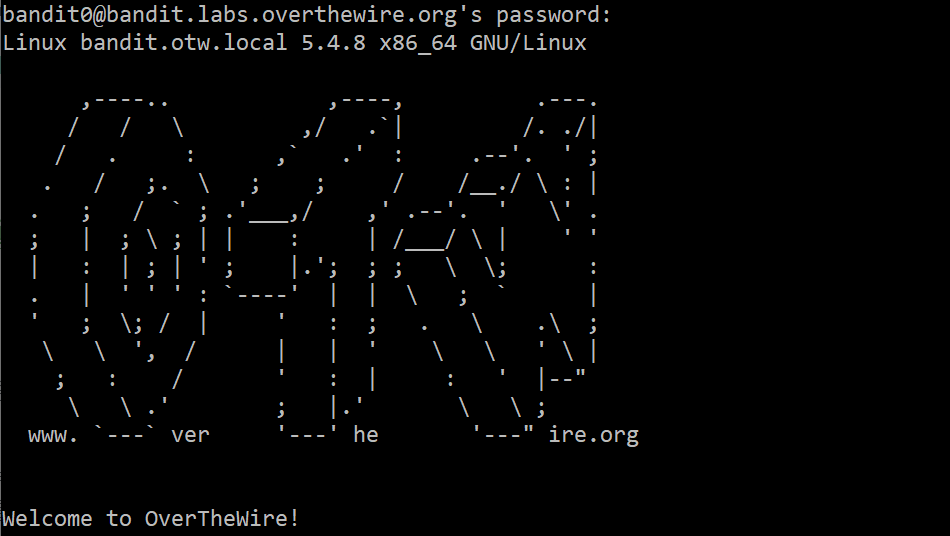
Writeup for OverTheWire Bandit levels 0 through 10. Covers basic Linux file reading, hidden files, find command, strings, sort/uniq, and base64 decoding.

My Week 2 notes from the CAT Reloaded entry-level program. Covers Linux basics from OccupyTheWeb's book — navigation, text manipulation, networking, permissions, processes, scripting, services, anonymity, wireless, and job scheduling.

My Week 1 notes from the CAT Reloaded entry-level program. Covers the OSI model layers, DNS, HTTP, TCP/UDP, IP addressing, subnetting, DHCP, NAT, and routing.